Frank Gehry: Early Life, Education, and Formative Years
Explore Frank Gehry’s formative years—from Toronto to Los Angeles and Harvard—and the influences that seeded his iconoclastic practice.
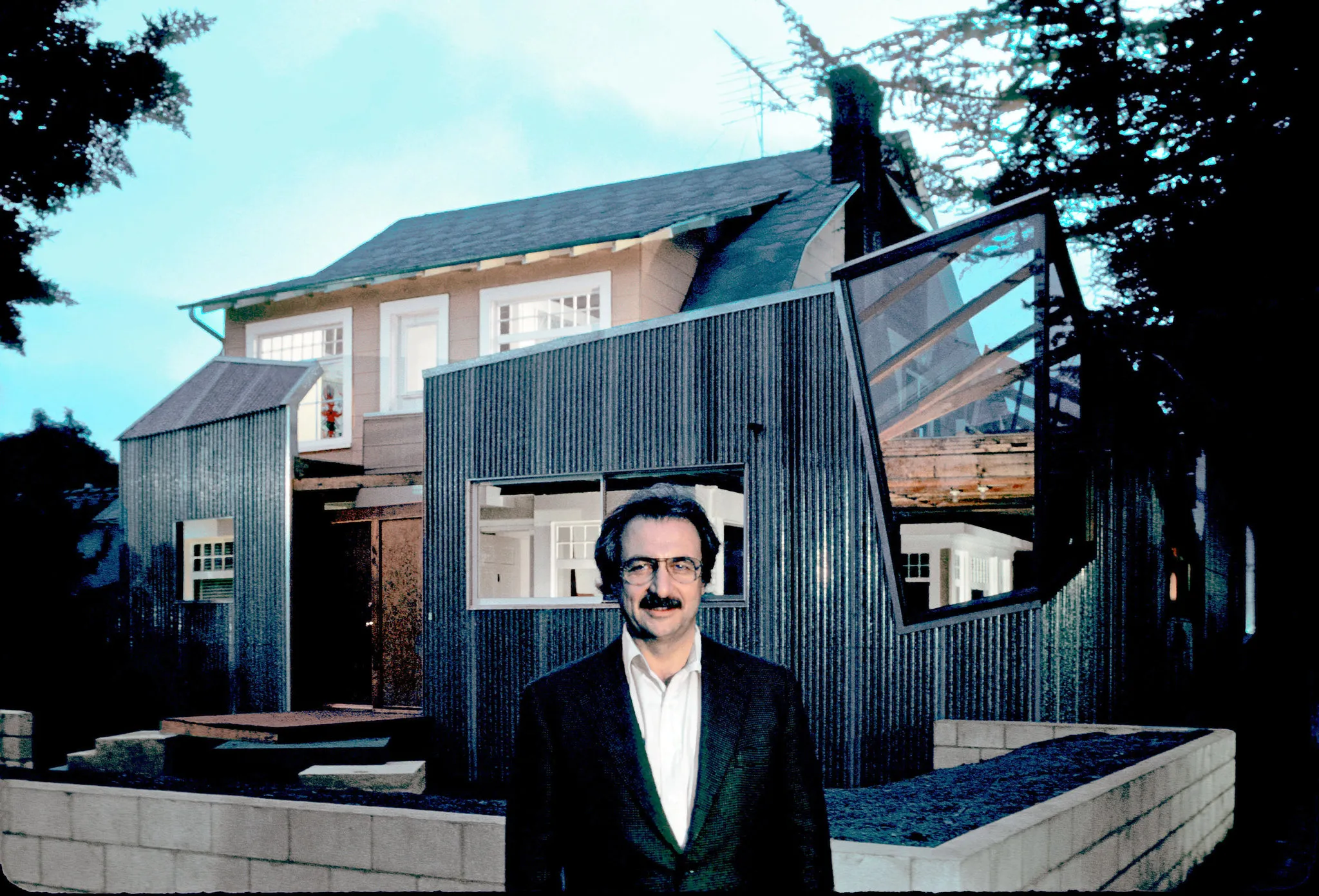
Overview
Frank Gehry’s story begins far from titanium sails and billowing glass—rooted in a family that taught resourcefulness, hustle, and curiosity. Those early lessons shaped a designer who treats architecture as process, experiment, and civic narrative.
Timeline (Formative Milestones)
| Year | Milestone |
|---|---|
| 1929 | Born in Toronto, Canada |
| 1947–1954 | Moves to Los Angeles; studies at USC |
| 1956–1957 | Graduate study at Harvard GSD |
| 1962 | Establishes practice in Los Angeles |
Insight: Early exposure to craft, fish forms, and everyday materials seeded a lifelong fascination with structure-as-story.
Family, Identity, and Craft
- Entrepreneurial family life: learning improvisation and value in the everyday.
- Fish forms as enduring motif: motion, shimmer, structure.
- Resourcefulness with materials: cardboard, wood, metal—anything that models an idea quickly.
Mini Gallery
Education (USC → Harvard GSD)
USC (Los Angeles)
- Exposure to West Coast experimentation and urban informality.
- Studios emphasizing iteration and context reading.
Harvard GSD
- Graduate study: urban design, policy, and the city as system.
- Visiting critics: debate, critique, and rigor in process.
Toolkit for a Young Architect
- Draw relentlessly (gesture over precision early).
- Model quickly (cardboard/wood/metal) to find massing.
- Context-first: street, light, program, people.
- Iterate: sketch → mockup → refactor → sketch again.
Tip: Read interviews where Gehry reflects on failure—his approach values risk and refactoring as integral to craft.
Early Los Angeles Practice
- Improvisation with materials: chain-link, plywood, corrugated metal.
- Houses and small projects as laboratories.
- Emergence of a language balancing wit, honesty, and civic empathy.
Key Terms
- "Process architecture": design as a sequence of tests.
- "Material literacy": knowing how materials behave and age.
FAQ
Did Gehry always work with curvy forms?
Not exclusively—early work embraced planar and raw assemblies. Curvature evolved with models, computation, and ambition.
What’s the role of fish forms?
They’re metaphor, structure, and light play—appearing in sculpture, buildings, and surface logic.
Further Reading & Archives
- USC School of Architecture oral histories
- Harvard GSD archives (studio pedagogy, visiting critics)
- Interviews on risk, failure, and iteration
About the Author

Architecture Editor
I wrote this guide so your visit to the Fondation Louis Vuitton feels calm, curious, and well‑timed—without missing what makes Gehry’s building so special.
Tags
Comments (0)
Loading comments...